
Bridging the Epistemic Divide: A Knowledge Management Analysis of Traditional Water Wisdom and Contemporary Governance, Case Study of the Ourika Valley (Morocco)
DOI:
https://doi.org/10.34190/eckm.27.1.5186Keywords:
:Knowledge Management, indigenous knowledge, water governance, customary, SECI model, Ourika, MoroccoAbstract
This paper explores the relationship between ancestral water knowledge and contemporary policy in Morocco’s Ourika Valley, positing that the current crisis is fundamentally one of epistemic neglect. By examining the transition from community-based management to state-imposed groundwater contracts, the study investigates how modern instruments often devalue the tacit cognitive capital and indigenous knowledge of local populations.Utilizing a qualitative methodology that combines Nonaka’s SECI model with a survey of 55 stakeholders, the research analyzes the failure to integrate "tacit knowledge"—the deep, site-specific understanding of mountain ecosystems—into official policy. The analysis reveals a profound disconnect between the "explicit knowledge" utilized by state agencies and the "tacit knowledge" practiced by communities. Results indicate that top-down regulation frequently clashes with customary law, diminishing the social legitimacy of state projects, whereas traditional systems effectively manage scarcity through shared ethical constraints. The paper concludes that a sustainable future requires knowledge hybridization. Rather than substituting technology for tradition, the state must act as a mediator, integrating the precision of ancestral methods into formal legal frameworks. The study advocates for rethinking the water contract, transforming it from a top-down directive into a co-created platform that synthesizes modern technological rigor with the enduring wisdom of indigenous water management.
Author Biography
Mohamed Boukherouk, Cadi Ayyad University
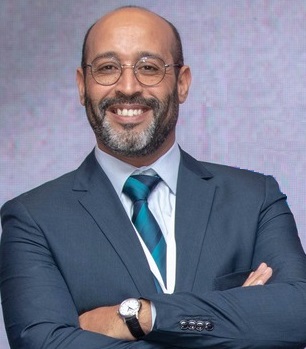
Mohamed Boukherouk is an Associate Professor of Geography at Cadi Ayyad University in Marrakech, Morocco, and a member of the Laboratory of Studies on Resources, Mobility and Attractiveness (LERMA). He holds both a PhD in the Development of Dry Areas and a Master's degree in Tourism and Economic Development, both earned from Clermont-Ferrand University.
His research explores tourism and its multifaceted contemporary challenges, specifically examining the intersection of tourism, digital innovation, mobility transitions, and how disruptive platforms reshape the Moroccan socio-economic landscape. Expanding on his expertise in economic development, his work deeply engages with actor systems and governance structures, especially within marginalized and protected areas, investigating how diverse stakeholders navigate power dynamics and collaboration. Furthermore, he investigates indigenous knowledge systems and traditional regulatory frameworks, analyzing how local governance models interact with modern development dynamics.
Downloads
Published
Issue
Section
License
Copyright (c) 2026 European Conference on Knowledge Management

This work is licensed under a Creative Commons Attribution-NonCommercial-NoDerivatives 4.0 International License.


